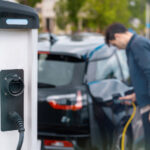

In recent years, the market for hybrid and fully electric transportation has attained significant expansion. In the U.S., EVs bid an all-purpose opportunity and cut down the rate of carbon and greenhouse gas emissions, coupled with lessened fuel and maintenance costs per mile, associated with other diesel and gasoline automobiles. The fundamental source of greenhouse gas emissions in the United States of America is the transportation segment, which is responsible for nearly 30% of U.S. emissions. Strategies such as precise fuel economy and CO2 standards, coupled with EV sales directions, have led to preliminary promises and constant EV market development. The government of the U.S. enhances the adoption speed of EVs through financial incentives and subsidies, which reduces the extensive cost of EVs. Regardless of financial limitations, incentives are backing national objectives for decreasing carbon and greenhouse gas emissions and enhancing air quality.
The following guide demonstrates the array of rebates, financial incentives, and tax credits available. It guides on who is eligible, how much an individual can collect, and how to access incentives. Whether getting a first electric vehicle or exploring options for a business fleet, this guide has the essential information an individual needs to make economic decisions.
In the United States, a range of policies and incentives for EVs varies significantly. At the state and local level, most U.S. policies have been implemented, which results in an assortment of requirements and incentive programs. Between state, local and federal EV charger incentives, you could save hundreds or even thousands on your EV charger installation. But with the present alterations to federal EV tax credits, it is essential to know what are accessible and available during the installation of an EV charger at residential or commercial complexes.
The primary step to get into incentives in your area is to competently identify the EV charging rebates. To fund the installation of EV charger, different states offer rebates or tax credits, and some utilities also offer incentives, lowering the total cost of installation.
Different federal incentives proposed by the U.S. to make EVs cost-effective, with the Clean Vehicle Credit (IRS 30D). This credit directs to new EVs that address specific demands, including final assembly across North America, battery component and mineral sourcing rules, and price caps reliant on vehicle type. Income constraints also apply, ensuring credit assistance for middle-income users. Approx USD 7,500 can be an individual access for new EVs, while used EVs bought from licensed dealers may get a credit of nearly USD 4,000 or 30% of the sale price, whichever is less.
Businesses stand to benefit from the Commercial Clean Vehicle Credit 45W, which proposes incentives for commercial fleets. Unlike the 30D credit, the commercial incentive does not enforce income limits or severe battery assembly demands, making it more adaptable. Up to USD 7,500, eligible commercial EVs may be grasped by light-duty vehicle owners and up to USD 40,000 for medium- and heavy-duty models. These credits efficiently support businesses in dropping fleet expenses, declining fuel expenses, and succeeding in sustainability purposes while moving towards electric mobility.
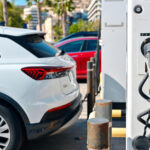
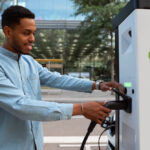
The United States aids the significant EV charging infrastructure development through the Federal Tax Credit for EV Charging Stations (IRS 30C). This incentive supports both homeowners and businesses in decreasing the cost of buying and installing EV charging equipment. For residential users, the credit covers 30% of the total cost, including the charger and professional installation, up to USD 1,000. This makes Level 2 home charging more available by decreasing upfront expenses for equipment, wiring advances, and labor.
For commercial spaces, the credit can be even more substantial. In eligible low-income or rural census tracts, businesses can gather 30% of project costs, with concentrated credits that scale reliant on the type and capacity of the charging station. This can extend tens of thousands of dollars for significant DC fast-charging installations. Adequate expenses may involve chargers, electrical panels, wiring, mounting hardware, and installation labor.
Asserting the credit is straightforward. Homeowners file IRS Form 8911 when proposing their federal tax return, while businesses follow a similar process through their tax professionals. Applicants must keep documented receipts and installation documentation. This federal EV tax credit push charging network development, decrease infrastructure costs, and help in the transition toward a cleaner transportation network.
The costs of electric vehicles and charging station installations were reduced due to state-level incentives. These programs also vary from state to state, each establishing their own rules, funding levels, and eligibility criteria. Some provide big rebates, others focus on tax credits, and even grant programs are being pursued to further improve accessibility. Know your state’s policies, because incentives can seriously cut down on the transition cost of electric mobility.
Several states propose direct financial backing for EV buyers. California’s Clean Vehicle Rebate Project (CVRP) offers rebates to residents who buy or lease eligible EVs, with amounts normally ranging from USD 1,000 to USD 7,500 relying on income and vehicle type. Income caps apply, and higher rebates are accessible for low-income households.
Colorado gives one of the nation’s greatest state tax credits, enabling EV buyers to claim a set rebate at the time of purchase, often thousands of dollars, with no income restrictions.
New Jersey’s Charge Up Program offers upfront rebates at dealerships, computed per mile of all-electric range, making EVs more cost-effective without needing a tax filing.
New York’s Drive Clean Rebate proposes up to USD 2,000 for qualifying EVs, with residency demands and additional incentives for low-income applicants.
Recently, the Illinois Department of Transportation (IDOT) circulated a draft, Notice of Funding Opportunities for the establishment of the Illinois National Electric Vehicle Infrastructure (NEVI) Program, focused at pushing the deployment of electric vehicle charging infrastructure in Illinois. In the financial year 2023, Illinois received USD 31,655, 626 in funding for NEVI Program.
In addition, through the Clean Fuels Rebate Program, Illinois EV rebate offers approximately USD 4,000 on new EV purchases or leases until June 30, 2027, and phasing down to USD 1,500 by July 2028. Whereas the NEVI Program was financed under the BIL by USD 7.5 billion, which aims to establish a nationwide network of EV charging infrastructure, with an objective of 500,000 charging stations by 2030.
Illinois residents can claim the federal home EV charger incentive. In 2025, President Trump signed HR1 into law, dramatically reducing the deadline for Illinois EV credits. The Illinois EV tax credit was assumed to be accessible through the decade, and the home charging credit was set to last until 2032. The Alternative Fuel Vehicle Refueling Property Credit offers nearly USD 1,000 for home EV charger installation. Nearly 30% of installation costs are covered under this, and through June 30, 2026, is accessible for installations, providing more duration than the vehicle credits.
Residency, vehicle type, purchase method, and sometimes income are a few factors of eligibility. Incentive amounts are modified depending on the model, battery size, or all-electric range.
Different states also hold home and commercial charger installation. Residential rebates often report Level 2 charger costs and installation fees, with programs proposed by states such as California, New York, and Massachusetts. Commercial and workplace incentives involve grants for multi-unit dwellings, businesses, and public charging sites.
Programs involve California’s CALeVIP, which funds both Level 2 and DC fast chargers, and NYSERDA’s Charger Rebate Program, proposing reinforcement for home, workplace, and fleet charging infrastructure which further develop easy charging accessibility and surge EV adoption statewide.
Succeeding EV and EV charger rebates demand careful consideration of documentation and program rules. Each incentive, whether federal, state, or utility, has its own demands, but follows the same structure for most of them. The correct paperwork and understanding of the application steps will enhance your chances of receiving the complete benefit.
To apply for EV acquisition rebates, you’ll usually be required to provide proof of purchase, such as a sales agreement or lease contract, along with the Vehicle Identification Number (VIN). Some programs may demand registration documents to prove residency and vehicle eligibility.
For charging station rebates, applicants often must offer an installation invoice from a licensed electrician, describing labor, materials, and equipment costs. Programming run by utility companies may demand utility account details to validate that the installation appeared at the service address. In certain cases, specifically for higher-value rebates, you may be required to submit photos of the installed charger or consent to prove the work met local electrical code conditions.
Ready these documents in advance helps avoid waits or refusals.
1. Start evaluating the official program guidance to validate eligibility (income limits, equipment demands, deadlines, residency rules, and others).
2. Once eligible, fill out the online application form and upload all the required documents.
3. After submission, the program administrator examines application and checks all materials.
4. Surplus information or clarification may be demanded, so examine your email and respond rapidly.
5. The application then moves to the consent stage, where it is either acknowledged or sent back for alterations.
6. After consent, rebate payment timing differs by program; some propose instant discounts at dealerships or installers.
7. Others offer reimbursement through a mailed examine, direct deposit, or utility bill credit, normally within weeks or months.
8.Staying organized, responding promptly, and following instructions surges your chances of receiving the full rebate.
1. Lacking Income or Price Cap Demands
2. Purchasing an EV Not Authorized for the Federal Clean Vehicle Credit
3. Set up a Charger Without Needed Permits
4. Forgetting Deadlines for Rebate Proposals
5. Not Authenticating Your Utility Provider’s Programs
The increased savings on electric vehicles and charging installations comes down to preparation, timing, understanding of federal EV tax credit, state, and utility incentives, and knowing how to leverage them efficiently. This will significantly lower the owning cost for an EV and help you set up home or commercial charging. Getting organized documentation, making sure eligibility supplies and applying before the closing date confirms that you gather every dollar accessible.
Incentive programs progress regularly as funding changes and progressive policies roll out. Repeatedly checking your state’s energy department, utility provider, and federal resources supports you stay updated on the newest opportunities. A small amount of research can rationalize key savings over the life of your vehicle.
To continually find the best incentives, individuals need to consult reputable databases such as the U.S. Department of Energy’s Alternative Fuels Data Center or their state’s EV incentive portal. These tools help in making informed, cost-effective decisions on your switch to electric mobility.