Over 3 million electric vehicles are now on U.S. roads, and the country has traversed more than 160,000 public charging ports, a number rising significantly each year. Yet here’s the worrying part: over 80% of EV charging happens at home, while public fast chargers can offer anywhere from 7 kW to over 350 kW, depending on the connector and vehicle competence. That’s the difference between a full overnight charge and adding 200+ miles in under 30 minutes. In the U.S., standards such as CCS and NACS are redefining compatibility and speed. Understanding charging port type, connector types and charging levels helps EV owners improve efficiency, decrease downtime, and plan every journey.
The EV charging connector type directly affects vehicle compatibility, charging speed, and infrastructure admittance. Not every EV function with every types of charger in public without adapters, and connector standards decide whether you can use precise networks. Accessibility also differs; some connectors are built for Level 2 charging, while others are enhanced for high-speed public DC fast charging. Selecting the ideal connector and adaptor plug for car impacts installation costs and daily convenience. Significantly, with industry moving toward standards such as NACS, choosing a compatible system aids future-proof your EV investment.
EV charging levels vary mostly by types of charging ports, voltage and power delivery. Level 1 (120V AC) values a standard household outlet and usually adds 3–5 miles of range per hour, perfect for overnight home charging with low daily mileage. Level 2 (240V AC), frequently installed in homes and workplaces, offers 7–19 kW, adding 20–40 miles of range per hour.
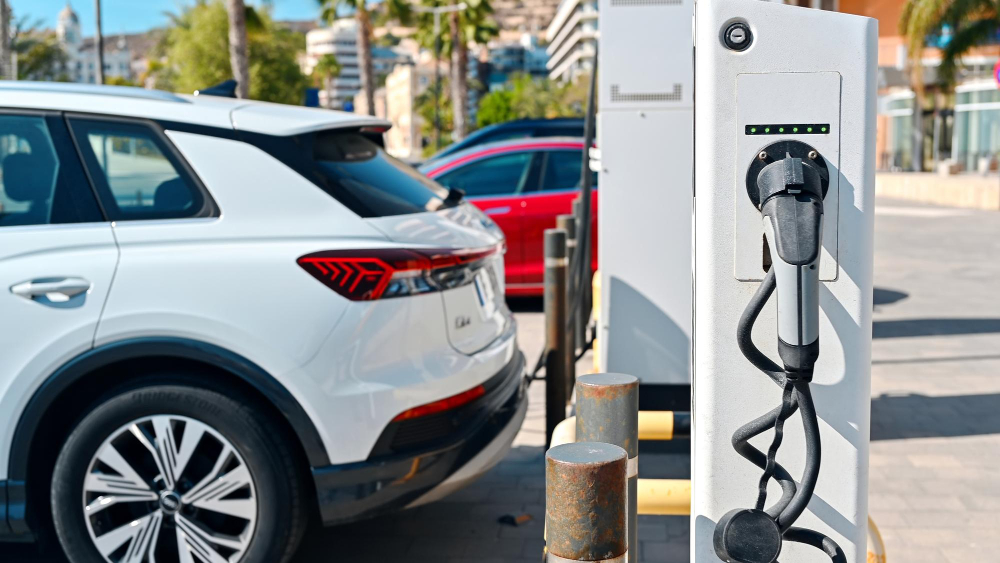
DC Fast Charging (400V–1000V+ DC) bypasses the onboard charger and supplies high power directly to the battery, often adding 200+ miles in 20–30 minutes. It’s principally used along highway corridors and commercial charging hubs for quick top-ups throughout long-distance travel.
In North America, SAE J1772 (Type 1) is the standard connector for Level 1 (120V) and Level 2 (240V) AC charging. It is efficiently utilized by most non-Tesla electric vehicles and aids power delivery up to approximately 19.2 kW, counting on the vehicle’s onboard charger capacity. J1772 connectors are in general found in residential garages, workplaces, and commercial parking facilities, making them the pillar of everyday EV charging and every electric charging types.
Meanwhile, NACS, formerly proprietary to Tesla, has quickly achieved industry-wide acceptance. Its compact, lightweight design supports both AC charging and high-power DC fast charging through a single port. With central automakers transitioning toward NACS compatibility, it is becoming a governing connector standard across the U.S., proposing extensive network admittance and long-term infrastructure alignment for EV owners.
The CCS (Combined Charging System) is the most significantly implemented DC fast charging connector. Assisting power levels up to 480 kW, CCS is in general found at public highway corridors and commercial charging centers. It make available rapid charging, often adding hundreds of miles of range in under 30 minutes, counting on vehicle capability.
The CHAdeMO standard, once leading in initial EV models, now has limited adoption in new U.S. vehicles. However, it remains necessary for legacy EV owners who still reliant on consistent fast-charging infrastructure.
Important Note: Definite charging time depends on battery size, vehicle restrictions, and state of charge. Charging generally reduces speed after 80%.
As a U.S.-based manufacturer, Maverick EV (MES) designs NACS-ready, CCS-well-matched, OCPP-reinforced chargers with scalable power from 7kW to 480kW, manufactured for durable infrastructure growth.